
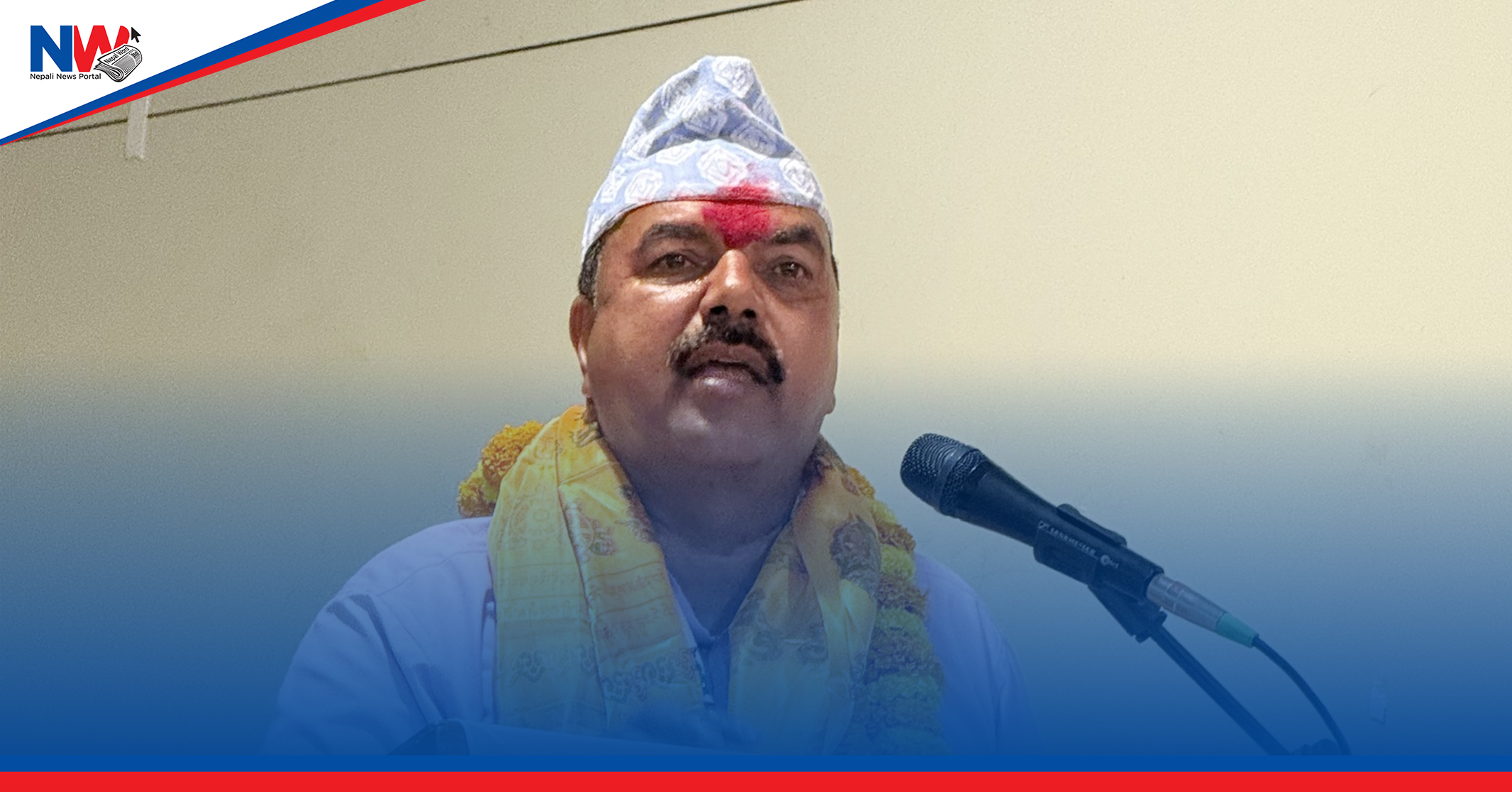

In every constitutional democracy, elections serve as defining moments in the life of a nation. They are not merely periodic political contests but opportunities for citizens to determine who will carry the solemn responsibility of shaping laws, safeguarding institutions, and steering national development. Under the framework of the Constitution of Nepal, Members of Parliament are entrusted with duties that extend far beyond representation. They are lawmakers, overseers of executive conduct, custodians of fiscal integrity, and protectors of fundamental rights. In this context, the candidacy of Basu Dev Ghimire stands out as one grounded in governance experience, legal consciousness, and a forward-looking national vision.
From a lawyer’s perspective, the strength of a candidate lies not in rhetorical appeal but in demonstrable adherence to rule of law and institutional discipline. Public trust is earned when leadership reflects constitutional values in action. Basu Dev Ghimire’s career trajectory—from municipal executive to federal legislator—offers a compelling narrative of leadership that has consistently aligned administrative practice with constitutional principle.

During his tenure as Mayor of Tilottama Municipality, Basu Dev Ghimire presided over a period of structured development, administrative consolidation, and model local governance that earned the municipality national recognition as one of the best-performing in the country. Grounded in a disciplined understanding of procurement law, financial regulation, public accountability, and participatory governance, he treated local government not as an extension of the center but as a constitutionally empowered institution with legislative, executive, and fiscal authority. Under his leadership, Tilottama witnessed systematic urban planning and tangible infrastructure improvements, including expanded road connectivity, strengthened drainage systems, and modernization of municipal services to accommodate rapid urban growth. These initiatives were embedded in documented annual policies and transparent budgetary frameworks, reinforcing fiscal responsibility and administrative clarity.
Beyond infrastructure, his administration advanced progressive civic campaigns such as the “Zero Polythene” initiative, the “My Pocket: My First Dustbin” campaign promoting individual responsibility for waste management, collective sanitation drives, and a strong push toward digitalized municipal services. Tilottama was further distinguished for child-friendly governance practices, cleanliness, organization, and environmental consciousness. His tenure also emphasized social inclusion and youth empowerment through vocational training programs aimed at job creation, as well as the provision of free sanitary pads and skill training for women and girls to promote dignity and self-reliance. Demonstrating personal integrity, he donated his mayoral salary to fund scholarships for deserving students in community schools, underscoring his belief that leadership requires both institutional reform and personal accountability. Collectively, these initiatives transformed Tilottama into a clean, organized, forward-looking municipality and established his mayoralty as a compelling example of visionary and results-oriented local leadership.
Ghimire’s transition to the national stage as a Member of Parliament representing Rupandehi-1 expanded the scope of his public service. Bringing with him firsthand knowledge of policy implementation, he entered Parliament with practical insight into how legislation affects municipalities and citizens alike. This continuity between executive experience and legislative responsibility is rare and invaluable.
“This election is not about politics alone—it is about choosing principled leadership, and Basu Dev Ghimire stands ready to serve with integrity, discipline, and vision.”
In the federal Parliament, he consistently addressed substantive policy challenges rather than engaging in superficial political discourse. One of his significant interventions centered on the urgent need for a comprehensive and enforceable legal framework for solid waste management. Rapid urbanization across Nepal has intensified environmental and public health concerns, exposing gaps in coordination between federal, provincial, and local authorities. Ghimire’s advocacy emphasized the necessity of clear legislative standards, sustainable waste treatment systems, and structured fiscal support for municipalities. His stance reflected a broader understanding that environmental stewardship must be institutionalized through law, not left to fragmented or reactive measures.
Equally forward-thinking was his call for increased budget allocations dedicated to innovation and research for Nepal’s young and talented minds. Recognizing that the global economy increasingly rewards knowledge, creativity, and technological advancement, he argued that sustainable national growth requires investment in intellectual capital. By advocating support for research and development, entrepreneurship, and scientific inquiry, he addressed one of Nepal’s most pressing concerns: the migration of skilled youth in search of opportunity. His policy orientation suggested that retaining talent requires not merely patriotic appeals but structured and sustained investment.
Perhaps most consequentially, Ghimire raised his voice in favor of stronger legal frameworks addressing banking offences. Economic resilience depends upon public trust in financial institutions. When regulatory safeguards are weak, investor confidence diminishes and ordinary depositors bear the risk. By calling for clearer and stricter accountability measures within the banking sector, he underscored the intrinsic relationship between legal certainty and economic stability. Financial growth without robust regulatory oversight is inherently fragile; growth anchored in transparent and enforceable law fosters long-term stability.
Taken together, these achievements portray a leader whose public service is guided by coherence and continuity. As mayor, he implemented policies within the discipline of constitutional limits. As a parliamentarian, he sought to refine and strengthen the legislative frameworks that guide governance nationwide. This dual experience positions him uniquely to understand both the formulation and the execution of public policy.
From a lawyer’s analytical standpoint, Basu Dev Ghimire exemplifies the qualities essential for effective parliamentary leadership. He demonstrates respect for constitutional boundaries, commitment to fiscal accountability, dedication to social justice, and foresight in addressing emerging policy challenges. His career reflects an understanding that democracy is sustained not by charisma but by credible institutions and enforceable laws.
In the forthcoming election in Nepal, voters are called upon to evaluate more than campaign narratives; they are invited to consider which candidate possesses the experience and constitutional maturity necessary to navigate the nation’s evolving federal landscape. The challenges ahead—urban management, environmental sustainability, youth employment, technological advancement, and financial regulation—require leaders capable of bridging aspiration with implementation. Basu Dev Ghimire’s journey from local governance to national policymaking offers evidence of such capability: his record in Tilottama demonstrates administrative competence and social commitment, while his parliamentary interventions reveal policy depth and legislative foresight. Together, they compose a portrait of leadership grounded in integrity, discipline, transparency, and vision. As citizens prepare to cast their votes, the question is not simply who can win an election, but who can legislate responsibly, oversee prudently, and govern faithfully within the framework of the Constitution; in this regard, Basu Dev Ghimire presents himself as a visionary candidate prepared to contribute meaningfully to Nepal’s democratic and developmental future.